Spyglass Hill Just Set A Price Record While Corona Del Mar Cooled Off
August 13, 2026
August 13, 2026
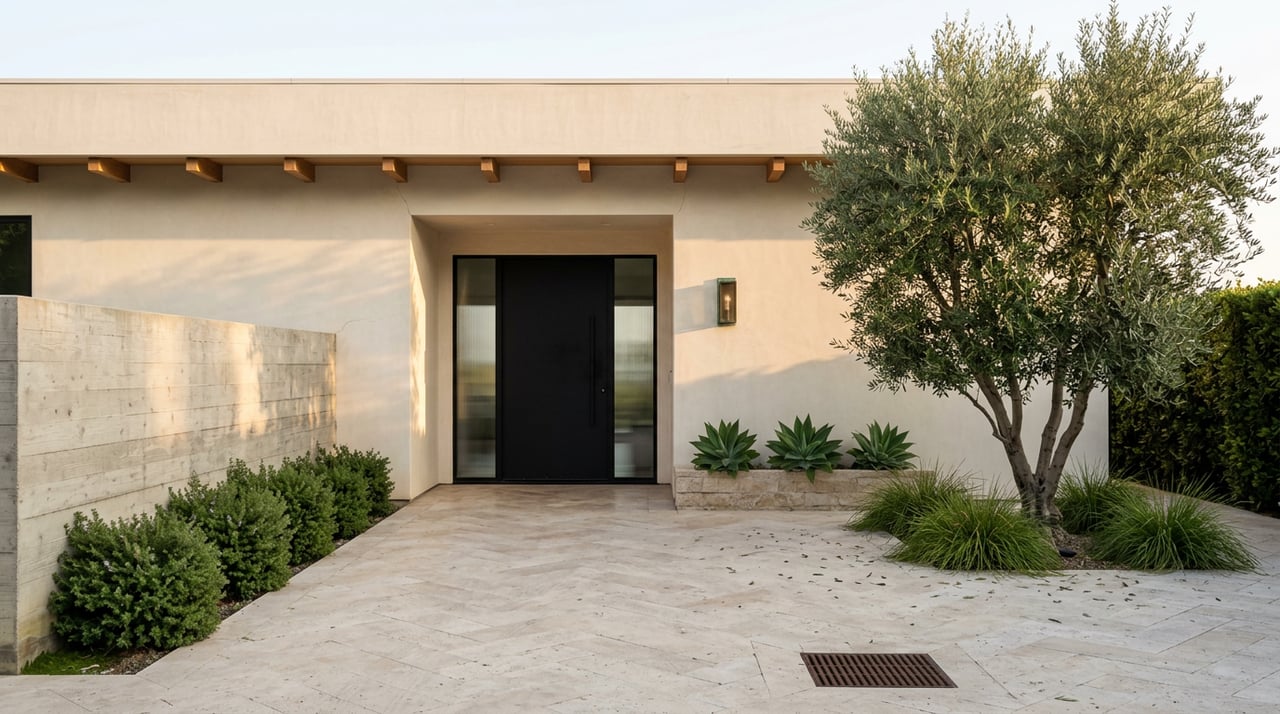
Twenty-six years, one lot, three sales. In 2000, the property at 53 Cambria Drive in Spyglass Hill sold for $1.22 million. In 2023, the 1975 house still standing on it sold for $6.4 million. In 2026, a brand-new home built on that same ground sold for $13.5 million, or roughly $3,359 per square foot, the highest price ever recorded for a home in Spyglass Hill, according to Garrett Weston of Coldwell Banker Realty, who represented the buyer.
Nothing about the dirt changed in that span. The view corridor was always there. What changed was what got built on top of it, and that distinction is the whole story if you're trying to make sense of Spyglass Hill in 2026.
It's tempting to read a record sale as a signal that a neighborhood is having a moment. Spyglass Hill's record tells a narrower story than that. Paul Daftarian of the Daftarian Group, who represented the seller, credited the home's placement, not a rising tide. Weston attributed the sale to the combination of a rare, panoramic view corridor and a brand-new, architecturally significant residence. The home, designed by Laidlaw Schultz Architects and built by Cornerstone Construction, delivers 12-foot ceilings, an open floor plan, and a 22-foot kitchen island, with views that stretch across Newport Harbor, Catalina Island, and the fairways of Pelican Hill Golf Club.
That's a specific product. It is not what most of Spyglass Hill looks like today, and that gap is where the real information sits.
Weston described Spyglass Hill as one of Orange County's hidden luxury neighborhoods, arguing that while Crystal Cove and Irvine Terrace get more attention, Spyglass Hill offers the same privacy, lot size, and view access at a comparative discount. He called it one of the best value propositions in coastal real estate. That's a case for the neighborhood as a whole. It is not evidence that every house in it is worth the same multiple.
Spyglass Hill was one of Newport Beach's first master-planned communities, built by the Lusk Co. in the 1970s on a hillside above Pacific View Memorial Park and south of the San Joaquin Reservoir. Of its roughly 350 home sites, only a handful were originally platted as true custom lots. The rest went up as production homes built to a shared template, the kind of house you'd find repeated with minor variation street after street.
Half a century later, that original stock has split into two very different products. Real estate professionals who track the community estimate that roughly half of Spyglass Hill's homes have been substantially rebuilt or updated to custom-level finishes, while the other half remain closer to their original 1970s condition. Both halves share the same streets, the same HOA, and the same zip code. They do not share the same price logic.
| Original or lightly updated (roughly half the neighborhood) | Rebuilt to custom standard (the other roughly half) | |
|---|---|---|
| Condition | Largely as Lusk built it in the 1970s | Rebuilt down to the studs, or replaced entirely, often within the last few years |
| What actually sets the price | The lot, the view corridor, and how much renovation risk a buyer will absorb | Finished architecture, current systems, and no construction timeline ahead of you |
| Recent example | The 1975 house at 53 Cambria Drive, sold for $6.4 million in 2023, before demolition | The rebuild that replaced it, sold for $13.5 million in 2026 |
A single "median price for Spyglass Hill" flattens that table into one number. It tells you almost nothing about which of the two houses you'd actually be bidding on.
The OCBJ piece on the Cambria Drive sale points to why that gap has widened rather than narrowed. Weston tied the sale to a broader pattern of affluent Orange County buyers paying up for newly built, turnkey homes as construction costs climb and permitting stretches out.
"Buyers are willing to pay a premium because building a comparable home today would require significant time, capital and execution risk."
That's the mechanism. A buyer choosing between the untouched 1975 house and the finished rebuild isn't really pricing square footage or finishes. They're pricing the years of design review, permitting, and construction risk they'd otherwise have to absorb themselves. Weston framed it as buyers wanting locations that are hard to find elsewhere without spending years getting there. For a certain buyer, paying millions more to skip that runway is the rational move, not the extravagant one.
That also explains why this segment skews so heavily toward cash. Buyers who don't want to carry construction risk tend to be the same buyers who don't want financing contingencies slowing down a close on a house they can walk into immediately.
Here's where the bifurcation inside Spyglass Hill connects to something bigger happening across Corona del Mar. In August 2026, Corona del Mar's median list price sat at $4.64 million, with price per square foot down 5 percent from where it stood a year earlier. Read on its own, that looks like a market losing steam.
Set that next to Spyglass Hill's new price ceiling, or against the $48.5 million spec home sale on Ocean Boulevard that closed the same summer, and the softening headline stops making sense as a story about the neighborhood cooling. It starts making more sense as a story about product mix. When more of the transactions in a given month skew toward original-condition homes, the median and the per-square-foot average both drift down, even while the ceiling for finished, view-corridor custom homes keeps climbing. The neighborhood isn't cooling. The mix of what's trading is shifting.
Data covering roughly a month of Corona del Mar closings in mid-June 2026 makes the same point from a different angle. Homes that went under contract in fewer than 15 days sold for an average of 100.2 percent of list price. Homes that sat for more than 30 days closed at 94.0 percent of list, a 6.2-point gap. Roughly half of that same month's closings, 13 of 25, were all-cash. None of that is explained by a single market temperature. It's explained by whether the specific home was priced for what it actually was, an original or a rebuild, a renovation project or a finished product, and whether the right buyer for that product showed up fast.
If you're comparing Spyglass Hill to other Corona del Mar neighborhoods on paper, two things are worth confirming before you trust any comp:
For Cassie's full breakdown of Corona del Mar's neighborhood-by-neighborhood pricing, including where Spyglass Hill fits against Irvine Terrace, Cameo Shores, and the Flower Streets, the same logic applies across the whole enclave: the address tells you the neighborhood, not the product.
If you're sitting on an untouched or lightly updated Spyglass Hill home, the Cambria Drive numbers aren't just interesting. They're the actual decision in front of you. A full rebuild captures the top of the market but takes years and real capital before you see a dollar back. A strategic renovation and staging plan can position an original home to compete on its own terms, without asking you to become a developer first. Which path makes sense depends on your lot, your view corridor, and your timeline, not on a neighborhood median that was never built to answer that question.
If you own a Spyglass Hill home and want a clear-eyed read on which side of that line your property sits on, and what it would take to move it, Cassie French pairs local market strategy with an in-house staging studio built for exactly this kind of decision. Request a free home valuation and staging plan and get a straight answer before you commit to either path.
Is Spyglass Hill the same as Spyglass Ridge? No. They're separate communities near each other in Corona del Mar with different inventory and pricing patterns. Confirm which one a listing or comp actually belongs to before using it to value a property.
Does a 1970s build date mean a Spyglass Hill home hasn't been updated? Not necessarily. Roughly half of the neighborhood's homes have been substantially rebuilt or updated to custom standard, even when public listings still show a 1970s build year. The build date alone doesn't tell you the home's actual condition.

Cassie French
Cassie French is a top real estate agent serving Newport Beach and North Tustin, specializing in helping homeowners maximize their home's value through strategic preparation, expert staging, and results-driven marketing. As a member of The Agency Orange County and owner of Classy AF Interiors, she combines real estate expertise with professional design experience to position homes for stronger buyer demand and top-dollar sales. With a hands-on, client-first approach and experience renovating over 100 homes, Cassie is trusted for her market knowledge, attention to detail, and proven ability to deliver exceptional results for sellers.


Facts about buying an Orange County Home

Enthusiastic, upbeat, and energetic, Cassie French's passion for the Newport Beach & North Tustin community shines through every interaction and transaction. Part of The Agency Orange County, Cassie's fresh perspective pairs beautifully with her commitment to excellence and extensive knowledge of the area to provide clients with unmatched guidance and care.
3426 East Coast Highway Corona Del Mar, CA 92625